We’re ranking the films of Pixar Studios, leading up to the release of Inside Out.
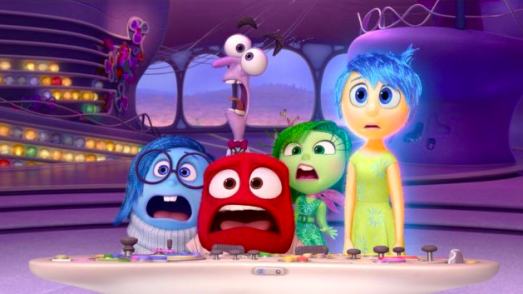
Inside Out
Directed: Pete Docter, Ronaldo Del Carmen
Writers: Pete Docter, Meg LaFauve, et al.
The success of Pixar has always depended on their refusal to pander to emotional depth of children. The longing of Woody to return to his friends in Toy Story, the fear that grips Nemo’s father in Finding Nemo, the loss Carl Fredricksen feels for his dead wife in Up, all of these stories are capable of reaching children and adults emotionally, though not in the exact same ways. Being adult means something different than being a child. We all grow up; our emotional complexity increases with age and experience. Children may lack that complexity of emotion, but they feel their emotions with equal, or even more, intensity.
Now, Pixar has made this intensity, and the growing complexity of emotion, the literal subject of their new film Inside Out. WALL-E is weirder than this. Toy Story 3 is funnier. Finding Nemo is more lush, encapsulating, visually. But Inside Out is the most inventive, the most surprising piece of cinema to come from the studio. It is also the best.
Inside Out is set primarily inside the head of an 11-year old girl named Riley. As the film opens, Riley is loving her childhood in Minnesota. She plays hockey, has friends, and loves her parents and is, overall a happy kid.
The central location in the movie is the control panel of Riley’s mind. Riley’s basic emotions control the panel, and thus her outward expression of emotion, one at a time. During her time in Minnesota, Joy (voiced by Amy Poehler) is most often in charge. Riley’s memories-essentially marbles that line her brain-are color-coded to match the emotion that accompanied them, and they are almost entirely Joyful. This includes her core memories, large marbles in the center of her control room. They are all happy memories. When Riley is feeling down, the team can activate a core memory and provide a warm burst of joy.
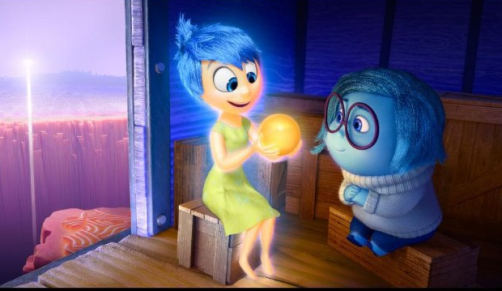
Joy, Sadness, and a happy memory
Until, that is, Riley’s family moves to San Francisco. Moving to a new place is scary, especially for an 11-year old. There’s lost friend and strange places, parents that are busy trying to start new jobs and find lost moving trucks. In San Francisco, Sadness (Phyllis Smith), Fear (Bill Hader), Anger (Lewis Black), and Disgust (Mindy Kaling) start to get more time in charge.
Slowly, Sadness starts to expand her reach in Riley’s brain, even turning happy memories of the past into sad ones. Joy fights to keep control, and their struggle leads to Joy and Sadness both thrown out of the control center. Riley, depressed, alone, can now only fear, anger and disgust. These emotions are not used to being in control. They giver Riley the bright idea to run away from her family and return to Minnesota.
Just think about that. Inside Out is the story of an 11-year old who cannot feel happiness or sadness. She is a stoic, unfeeling child, with violent outbursts of anger and fear.
The expulsion of Joy and Sadness provides the plot of Inside Out: the two emotions must travel through the byzantine architecture of the mind to return to the control panel, and restore Riley’s ability to feel her full range of emotions. Joy must work extra hard to stay positive about Riley’s future, and she drags Sadness along for the strangest road-trip buddy movie in a long while.
The landscape of the human mind, by the way, is completely crazy. There is the place where dreams are made, literally a movie studio called Dream Productions. There is the sub-consciousness, more the stuff of D.H. Lawrence’s than family entertainment. There’s the landfill where useless memories are thrown out. What’s useless is determined by miners on the job who determine, for example, the first three Presidents are worth remembering, but the rest can go. So can the state capitals.
There’s even the land of Abstract Thought, a delightfully odd scene that must have been a treat to write and even more fun to animate.
And much more, which I’ll leave for you to experience.
Amy Poehler’s spritely Joy and Phyllis Smith’s slow, monotonous Sadness carry much of the film’s emotional weight. Not since Ellen Degeneres in Finding Nemo has a Pixar voice-performance been this affecting. The change that Joy, and by extension Riley, undergoes in this movie is beautiful. Pete Docter’s visualization of watching a child’s memories turn from joy to sadness is some of the most powerful animated storytelling I can recall. Its master level, Hayao Miyazaki level, stuff.
And it will make parents cry, even as it captivates kids as a part of an adventure story. What it means to be “happy” is a complicated notion, and it only gets more complex as we get older. Pete Docter and Amy Poehler understand that complexity, and that feeling sad is not always such a bad thing.
Best Line, Anger: “Congratulations, San Francisco. You ruined pizza.’
Craziest Animation Moment: Non-objective Fragmentation
Most Unexpected Animation Criticism Term to Appear in Riley’s Brain : “Non-objective Fragmentation”
Biographical Detail: Pete Docter is a native of Bloomington, Minnesota. His inspiration for the film came from watching his own daughter’s experiences.
Number to remember: 5 and 1/2. The number of years Production Designer Ralph Eggleston spent making Inside Out.
Ratzenberger:
*not pictured*
Best Animated Feature: To be Determined.

Pingback: The Pixar List | The Stake
Reblogged this on Stuff I Like to Blog About.