5. The success of Serial.
 2014 will, for me, forever be the year of Serial. The podcast—which told a real-life story of murder and possible false conviction over several weeks—was hardly perfect. As journalism and storytelling, it had its failings. And it was, admittedly, a little hard to see Serial for what it truly was amidst its public reception, the thinkpieces, the obsessions, the backlash, and the backlash to the backlash. But love it or hate it, Serial represented a watershed moment in culture: the re-emergence of audio storytelling as a viable mass artform, and millions of people tuning in each week to what was essentially a piece of long-form journalism in an age when serious journalism is supposed to be dead.
4. Ursula K. LeGuin’s National Book Awards Speech.
It was, in many ways, a tough year for publishing. The ongoing Amazon/Hachette feud brought into sharp relief concerns about business models and revenues, and the place of books in the broader culture. Enter the great Ursula LeGuin, who gave a speech at the National Book Awards that was exactly what the book world needed to hear: calling writers, editors, and publishers not to be caught up in the petty obsessions of contemporary culture, but to bravely tell stories that help the culture imagine its way out of its current predicaments. “We live in capitalism,” said LeGuin, “Its power seems inescapable. So did the divine right of kings. Any human power can be resisted and changed by human beings. Resistance and change often begin in art, and very often in our art — the art of words.”
Here’s the whole speech:
 3. Gillian Robespierre’s Obvious Child.
Hollywood, we’re told, is a pretty liberal place—but in some ways, it’s extremely conservative. Take abortion, for instance. I’ve no doubt that most in Hollywood are pro-choice, yet it is taboo to have characters in films consider an abortion—unless, as in Juno or Knocked Up, the character ultimately decides not to have one.
Not so in Gillian Robespierre’s Obvious Child, a story about a female comedian who gets pregnant, has an abortion, and considers whether or not to tell or keep dating the father of the baby. Comedian Jenny Slate shines in the lead role. She’s hilarious and frank and poignant in the way that only Jenny Slate can be—and the film is quietly radical simply by letting this woman be who she is without judgment, by showing her story the way it would really happen. It’s a movie about abortion, yes—but it’s also about sex, and dating, and growing up. It was my favorite film of 2014.
2. The sly feminism of Broad City.
In Comedy Central’s Broad City, Abbi Jacobson and Ilana Glazer play twentysomething friends bumming around New York while they wait for their lives to begin. They’ve got no money, their professional lives are a disaster, they smoke pot, sleep around, and generally just enjoy their state of arrested development—and all of this sounds really familiar, except that its animated by the show’s sense of humor, which I can only describe with words like “anarchic” or “deranged.” It’s the funniest show I watched all year.

But what you don’t notice in the midst of all the laughs, until about four or five episodes in, is how quietly radical the show actually is. Simply by letting these two women be messy and childish and just as bawdy as the Apatow crew, it’s really empowering and a feminist show. It’s free to stream for Amazon Prime viewers, so binge season 1 and watch season 2 when it premieres in 2015.
1. Jeff VanderMeer’s Southern Reach Trilogy.
In Ursula LeGuin’s National Book Awards speech, she issues a call for writers of science fiction and fantasy “who can see alternatives to how we live now and can see through our fear-stricken society and its obsessive technologies to other ways of being, and even imagine some real grounds for hope…writers who can remember freedom. Poets, visionaries—the realists of a larger reality.”
Well, I’ve got good news for Ms. LeGuin, because 2014 was a fantastic year for courageous, boundary-pushing science fiction that dared to imagine worlds and ways of being beyond the limited perspectives that dominate reality in the here-and-now. April saw the American publication of Chris Becket’s Dark Eden, a novel examining the workings of human ideology and culture in a foreign environment. May saw the publication of Monica Byrne’s The Girl in the Road, which looks squarely at the political, economic, and environmental forces threatening our world and dares to imagine an existence beyond the apocalypses that we so often fear. Either could easily be the best science fiction books of the year.
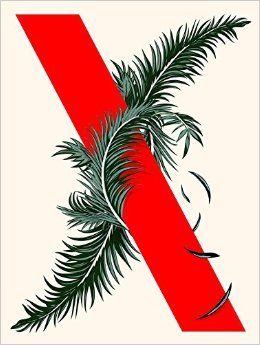 But for me, the hands-down best science fiction event of the year is the publication of Jeff VanderMeer’s Southern Reach Trilogy. Published as three novels throughout 2014, then as one omnibus volume at the end of the year, the trilogy was a publishing event unlike any before it. And the story itself is powerful and strange, imagining a relationship between man and nature that is full of portent, otherness, attraction, and menace. I devoured Annihilation, Authority and Acceptance; together, the trilogy is my favorite book of the year, one I plan to revisit often. Its publication—and that of many other excellent books in 2014—is proof positive that the publishing business is still a great place, perhaps the best place, for visionary stories that see through our fear-stricken society to other ways of being to be told, and to thrive.
