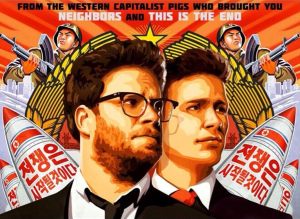
Here’s what we know about the hacking of Sony Pictures: The company was hacked by a group called Guardians of Peace (GOP). GOP did this because of offense taken at Sony’s upcoming comedy The Interview, in which Seth Rogen and James Franco go to North Korea to interview, and kill, North Korean leader Kim Jong-un.
About the hack, that’s about all we know. We don’t know if North Korea is behind Guardians of Peace. We don’t know if it the threats of violence are real or imagined. For all we know, the hacker could be kids in Kentucky.
And what we don’t know is not interesting; at least not compared to what we can know. So for three weeks, the world has talked about Sony.
We’ve learned, however, A LOT about Sony. The hackers stole unreleased films, screenplays, private emails, records of all kinds out of Sony’s digital safe. The depth of the hack is remarkable, and the consequences to Sony are going to be very real. Racially insensitive email exchanges about President Obama are unlikely to be forgotten, no matter how they made it into the public sphere.
About the hacked material, there is too much to recount. If you want to know everything about Sony, head to Vulture, who is updating Everything Revealed in the Sony Leak Scandal regularly. Whether or not you should look at those private email exchanges and financial documents is a more difficult ethical question to answer.
I’ve said, and still believe that the public does not have a right to stolen photos of celebrities. Do we have a right to stolen emails of celebrities? To Sony’s private financial documents? It’s not a perfect comparison. But I’d say probably we do not.
Either way, here is one thing that we have learned in 2014: digital ownership is worthless in our culture.
When Jennifer Lawrence had her images stolen, she declared the theft a sex crime. She was right. But the implication-not just from the thieves and pervs and curious onlookers but the media at large-has always been that if JLaw doesn’t want her images stolen then JLaw should not take them. Same goes for everyone, everywhere. No matter how digitally dependent our lives become, we have yet to get over the notion that “what is digital is ours, not yours.”
The same is being said about Sony. Until today, the story of The Sony Hack has been a story, primarily about revelations from previously private documents. What did someone I have never heard of or cared about before say about Angelina Jolie? Gossip! Channing Tatum is funny and charming? Gush! Annie is stolen and being downloaded illegally? Oh well!
Sony has private digital data? Well, that’s our data. The source is beside the point. Why worry ourselves about who hacked Sony or why when there is Hollywood Muckraking to partake in?
If I sound like a chastising parent, well, perhaps we need one. I’m not sympathetic to Sony-they come out looking just as bad or good as they deserve-but that does not mean that we should not reflect on what is happening. What is Sony’s, is Sony’s. No matter how miserable it may be, it’s not ours simply because it is on a hard-drive somewhere. The Sony Hack story is not, and never was, a playful Hollywood gossip column.
Which, today, became abundantly clear.
After three weeks, The Sony Hack story was finally redirected to the matter of actual consequence that it is. The Guardians of Peace have threatened violence against theaters showing The Interview. They’ve invoked 9/11 in their warnings, and by doing so have earned a victory for terrorism: the biggest theater chains in the US have pulled their plans to release The Interview, essentially derailing the film.
UPDATE: Sony has officially cancelled the Christmas Day release of The Interview.
