Yesterday Marvel announced plans for Phase 3 of their cinematic universe. It follows closely on the announcement from DC Comics/Warner Bros. of their own long-term film schedule. Which means we have a pretty good picture of the superhero cinematic landscape for the remainder of the decade.
In an effort to make it easy to follow, here is the schedule from DC and Marvel, combined, starting in 2015 with Avengers: Age of Ultron:
MARVEL DC
May 1, 2015: Avengers: Age of Ultron
July 17, 2015: Ant-Man
March 25, 2016: Batman v. Superman: Dawn of Justice
May 6, 2016: Captain America: Civil War
November 4, 2016: Doctor Strange
2017: Wonder Woman
2017: Justice League Part One
May 5: 2017: Guardians of the Galaxy 2
July 28, 2017: Thor: Ragnarok
November 3, 2017: Black Panther
2018: The Flash
2018: Aquaman
May 4, 2018: Avengers: Infinity War Part 1
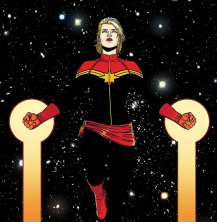
July 6, 2018: Captain Marvel
November 2, 2018: Inhumans
2019: Shazam
2019: Justice League Part 2
May 3, 2019: Avengers: Infinity War Part 2
2020: Cyborg
2020: Green Lantern
This list, which only includes Marvel Studios and DC/Warner Bros, names 20 films. It doesn’t include The X-Men Franchise (X-Men Apocalypse, 2016, plus individual character films in the works), Fantastic Four (Josh Trank’s re-boot summer 2015; sequel slotted 2017), or The Amazing Spider-Man series and their tepidly announced plans (Sinister Six 2016, TASM3 2018). That is a lot of superhero movies.
What does it mean? There are too many superhero movies.
We shouldn’t kid ourselves. Even fans of superhero stories (like me) should wonder how Hollywood can possibly sustain this level of cultural domination. The superhero bubble simply has to burst, right? A system cannot increase exponentially, forever.
There are certainly titles in this list that I am excited to see adapted to film, but that doesn’t change the fact that this list is simply overwhelming. Which is unfortunate because in some ways, the studios are just getting around the really interesting stuff. Black Panther? The super-genius ruler of the African kingdom of Wakanda? A Black Panther movie really could be weird, and powerful. Likewise, it’s exciting to see women getting their own superhero movies. There’s too few women starring in their own action and adventure films.
Still. When I see Black Panther‘s poster all I see is one more Marvel movie hitting all the Marvel beats, blandly. Maybe it’s superhero fatigue.
Clearly, though, studios don’t care about superhero fatigue. In fact, Marvel Studios is picking up the pace. In 2017 and 2018, the studio is INCREASING their output to three films per year. If some of us are feeling superhero fatigue, Marvel and DC and every other studio in the superhero business are betting we’ll get over it.
Will creators, though, ever get over it? There are new names, actors (Chadwick Boseman, Benedict Cumberbatch) and directors (Josh Trank, Scott Derickson) coming into the superhero universe all the time, and one would hope the early adopters could be offered an exit ramp.
It would be a shame if Joss Whedon remains in the Marvel world for the duration of Phase 3. With any luck, Whedon will get his Marvel superhero fill with Avengers: Age of Ultron, and then find his way back to his own worlds. Whedon is one of Hollywood’s most original teller of populist stories, I hope we get to see them.
The most important lesson we should take from the ever-expanding world-building efforts of Marvel and DC is this: Audiences want superheros. All the studios committing a decade and hundreds of millions of dollars into these franchises feed the public’s appetite. But the appetite is already there.
These films are getting made, and more will come in their wake. What should culture do with all these movies?
Thinking about that question in the past day, I was reminded of an exchange on Twitter last year. Alyssa Rosenberg related to the propensity of fans to panic after Gal Gadot was cast as Wonder Woman; NY Mag reporter Jonathon Chait replied, asking, Panic? Really?
Somewhere in this back-and-forth is the appropriate response to our superhero dominated decade. These characters are beloved to millions and have actual, decades long histories; their popularity means something, even if that something is hard to pin down. More importantly, the insatiable American appetite for stories in the good-and-evil universe of superheros and supervillains should not be rejected as irrelevant background noise for our culture. It is our culture.
Marvel and DC, the entire slate of superhero films that is planned from now until eternity, will be a part of our cultural literacy, pursued through academia and personal passion. The pursuit of superheros as a subject for criticism, as Alyssa Rosenberg states so clearly, is something that matters. No matter how tired we may be of all the spandex.
Chait’s rejoinder, though, is enticing. I mean, look at that list. My god. “People get way too worked up about superhero movies.”
