by Forest Lewis
One summer I listened to Moby Dick five times in a row. At only twenty-one and a half hours long, I could finish it over the course of about three working days. Concluding those five times through, however, I had reached my Moby Dick saturation point. I knew Moby Dick backwards and forwards and was tired of it. With supercilious fatigue I thought to myself: all right, Melville, I get it, you have nothing new to say to me, I will never listen to this book again. Then I happened to open the physical book to a random chapter and read it to myself. The performer’s voice still haunted certain turns of phrase, but as I read it I found that I was reading a new book—the words bloomed into an un-familiar sense and Moby Dick was once again strange. Why is this?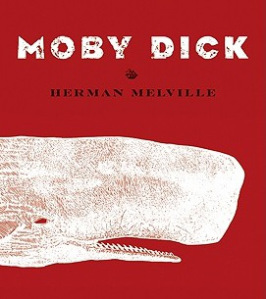
Frank Muller performs this particular version of Moby Dick. Muller, one of the more lauded of audiobook performers, has narrated, it seems, everything. (He suffered major brain damage in a motorcycle crash in 2001 and has since died from complications in 2008. He will be missed.) His reading of Moby Dick has gravity in it and real joy. His portrayal of Ahab is still ringing in my ears. I highly recommend his performance of Cormac McCarthy’s All the Pretty Horses.
The key to a great fiction audiobook performance is establishing a tangible difference between the characters’ distinct voices and the narrator’s. The task is a tricky one. The performer must have a keen and knowledgeable interpretation of the characters and their motives. We say performer as opposed to reader because the medium of an audiobook is much more akin to a one-man play in the dark than it is to reading a book aloud.
The virtue that an audiobook has above and beyond the text is one of the physicality and musicality of the human voice. I certainly could not read the text Moby Dick five times in a row. But the bewitchment of Muller’s voice, its incantatory power, seduces me and makes repetition easy.
I’ve found Samuel Beckett’s trilogy Molloy, Malone Dies, and The Unnamable to be rather tedious and difficult to read. Not so the audiobooks, which glimmer with entertainment and life. If we read so that we are not lonely, what better company can one find than an audiobook, in which another human’s audible voice tells you a story.
Those audiobooks are best where it seems the book itself ceases to matter and all that remains is the solicitous voice speaking as you would imagine a god’s voice would speak, murmuring in perpetuity, humming with depth and significance. It amounts to magic, actual enchantment.
It can only make the world of the book better. Davina Porter’s Anna Karenina, Steven Crossley’s Lord Jim, Michael Jayston reading le Carre entire. These are all voices which are inextricable from the world they are narrating so that when the voice ends the world ends. Their voice is that world. I only want the voice to continue on and so must start the audiobook over again. Reading the actual book doesn’t carry the same warmth. The text often seems dull and lifeless compared to the audiobook inhabited by an audible voice.
Michael Chabon’s The Yiddish Policmen’s Union narrated by Peter Riegert is another such world buoyed aloft by the power of a voice. Reigert’s Bronx accent adds a rich layer of sensory data atop Chabon’s Chandler-style prose. It works wonders for the appeal of the book. The same can be said of Mark Hammer’s performance of Faulkner’s Light in August. Hammer’s slow, well-modulated southern drawl makes one feel as if you’re sipping bourbon on the porch of a warm early evening listening to venerable history itself ramble on into the night. It’s entirely mesmerizing
Often this is partly to do with accent. The British performer Martin Jarvis reads most of Dickens and I’ve come to associate his voice, not only as the voice of Dickens, but as the voice of 19th century London. His varying accents, ranging across the British class spectrum, are vibrant beyond the text.
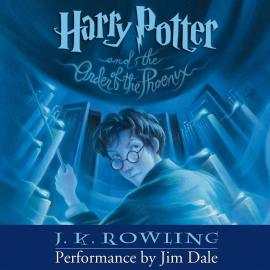 A good performer too has the added benefit of making crummy prose disappear. The Hunger Games and Harry Potter are case in point, so much so, that it seems these books were made to be audiobooks. At times there’s little I can do with Rowling and her adverbially dependent prose on the page. Somehow Jim Dale makes it not only enjoyable listening but quite an effective style.
But for all that can be gained by a voice, much can be lost by it too. There are many fine books whose performers have ruined them. Elliott Gould performs nearly all of Raymond Chandler’s Philip Marlowe books and doesn’t help them any—that may be my own bias, for I think of Marlowe’s voice as Bogey’s and no other. Mark Bramhall’s Performance of Revolutionary Road is so contemptuous and sarcastic in tone that I hate all the characters equally and despise Richard Yates just as much. Reading the paper book I find it not nearly so mean—the prose allows for far more nuance and compassion.
Just as actors bring out the emotions of a script, so the performer brings to life the multitude meanings of a book. This may be obvious to some, but what has not been obvious to me is that my own reading may be improved by making it into more of a performance. Too often my readings have elided, or been flat-out deaf, to the humor in a given work.
Listening to an audiobook of Jane Austen’s Northanger Abbey read by Donata Peters, for instance, I am astonished by what a riot it is. This makes for solid evidence that much humor is built on emphasis, modulation and timing as opposed to content. Of course I know that Jane Austen can be funny, but I didn’t know it could be this funny. My own silent reading of Austen is cliché, stodgy and far too 19th century, as if the characters were trying to bore themselves. This seems a good reason to read aloud to oneself, as if you were reading to a child (or at least imagining reading to a child). Your expressiveness in the recitation may free up a yet unknown sense. Irony, for example, is often hidden until spoken aloud.
This makes up the principle difference between the book and its audio version: all of those choices that you make while reading—choices of tone, emphasis, rhythm, humor—have already been made for you by the performer of the audiobook.
Which is to say that an audiobook has a bottom. For as much as a classic work of fiction can be interpreted in endless and mutable variations—every time you read it, you read it differently (or should)—the audiobook has limits. The performer has already done much of the basic interpretation for you. By selecting the rhythm of a sentence and the emphasis of certain words, the interpretive possibilities of a work are greatly reduced.
Perhaps this is why audiobooks have become so popular: not only can you listen to a book while multitasking, it is also less work for your brain. Listening to audiobooks is, quite simply, far easier to do than reading.
Which is lucky for me because I have a job that allows me to listen to audiobooks all the time. I can tear through books at a remarkable speed. Susanna Clarke’s Jonathan Strange and Mr.Norrell goes down in a week. War and Peace takes not much longer. Once upon a time I listened to The Lord of the Rings at least twice a year. The Harry Potter omnibus has been consumed in less than a month. I might do Murakami’s The Wind Up Bird Chronicles the first part of the week and finish with Woolf’s To the Lighthouse. Nearly all of James Joyce gets burned through in a month. Such are the benefits of technology. How much do I retain? Probably not as much as if I were reading, but I can always re-listen and do so often.
I count at least eight unabridged versions of Moby Dick on Audible.com. Had I known of these other versions way back in that summer of Moby Dick, I might have listened to five of them instead of the one five times. If so I would have a deeper, more expansive understanding of the book—all those different voices saying “Call me Ishmael,” in so many different registers. Each of those eight versions are narrated by men: I await the day when a woman will perform Moby Dick, introducing yet one more unheard of sense.
Forest’s TOP TEN AUDIOBOOKS OF ALL TIME
This list means to compile those excellent performers that are especially complimentary to their books. These are books I always want to be listening to again and again. (alpha by author)
Jane Austen, Sense and Sensibility, performed by Juliet Stevenson
Miguel de Cervantes, Don Quixote, performed by George Guidall
Charles Dickens, David Copperfield, performed by Martin Jarvis
Harper Lee, To Kill a Mockingbird, performed by Sissy Spacek
William Faulkner, Light in August, performed by Mark Hammer
Homer, The Odyssey, performed by Ian McKellen
Zora Neal Hurston, Their Eyes Were Watching God, performed by Ruby Dee
Cormac McCarthy, All the Pretty Horses, performed by Frank Muller
J.R.R. Tolkien, The Hobbit, performed by Rob Inglis
Leo Tolstoy, Anna Karenina, performed by Davina Porter
Forest Lewis wrote this article for The Stake. Forest is a carpenter/writer living in Minneapolis. He writes a weekly horoscope for Revolver. Those can be found here. Find him on Twitter @interrogativs.

Reblogged this on Gently Read Literature.
I always felt a bit of shame about consuming literature in audio form. Like it is not as thorough or serious, but now if feel free. Thank you, Forest. Listening to The Pale King by DFW it was so much funnier than reading it.
Reblogged this on Russell Rathbun.
Pingback: Earbud Lit | Audiobook History
Pingback: How to Read Moby-Dick | The Stake