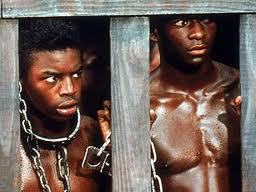
 The History Channel is planning to remake the 1977 miniseries Roots, reports Deadline. Roots was a massive cultural event when it first aired, and it’s doubtful that the reboot will command the same viewership as ABC did in the 70s, before the fragmentation of television audiences through cable and streaming. Still, slavery narratives are experiencing something of a moment right now, with 12 Years a Slave and Django Unchained, and it’s possible that there’s some kind of zeitgeist thing happening with the subject matter.
Still, the whole thing raises some questions—like, why remake Roots? Why try to repeat that cultural moment?
And, perhaps more importantly, why are narratives of black suffering seemingly popular right now?
Writer Roxane Gay asked a version of this question in a piece for Vulture: Where are the serious movies about non-suffering black people? Considering recent releases like The Help, Fruitvale Station, Lee Daniels’s The Butler, and especially Steve McQueen’s acclaimed 12 Years a Slave, she finds something almost fetishistic about Hollywood’s hunger for portrayals of black suffering. Meanwhile, the shower of critical praise for such films ensures that more will be made, and squeezes out enthusiasm for projects portraying other aspects of the black experience.
Gay’s conclusion:
There is no one way to tell the story of slavery or to chronicle the black experience. It is not that slavery and struggle narratives shouldn’t be shared but these narratives are not enough anymore. Audiences are ready for more from black film — more narrative complexity, more black experiences being represented in contemporary film, more artistic experimentation, more black screenwriters and directors allowed to use their creative talents beyond the struggle narrative. We’re ready for more of everything but the same, singular stories we’ve seen for so long.
Meanwhile, in a NY Mag interview, Levar Burton—who became famous for his portrayal of Kunta Kinte in Roots, offers a different perspective, saying that the slave narrative is an important one to revisit every so often, due to the “rubber band effect” of ideological entrenchment. His interviewer observes that 12 Years a Slave is being praised for finally doing away with the Tara myth—something that Roots was held to have done definitively decades earlier. So what happened?
Burton’s response:
That’s a very good question, and I wish I had an answer for you. But I don’t. We would love to forget, I think. We would love to go back to the fairy tale, to the fantasy of Tara. But it’s too easy to try and erase the sins of the past and claim, “That wasn’t me.” We are all capable of unspeakable horror. We are all capable of unthinkable brutality. We have to be ever vigilant and continue to remind ourselves of our propensity for monstrosity. And there’s a lot of resistance to revisiting this issue. I’ve heard disquieting chatter on both sides of the color line. Why do we have to revisit this again? Well, we have to revisit this again because all of us have forgotten!
I see room for both points to be true simultaneously: it’s necessary for America to be reminded of the monstrous sins of its past. But if we can’t make room in popular culture for narratives about black experience that don’t involve suffering, there’s something wrong with our present, too.
