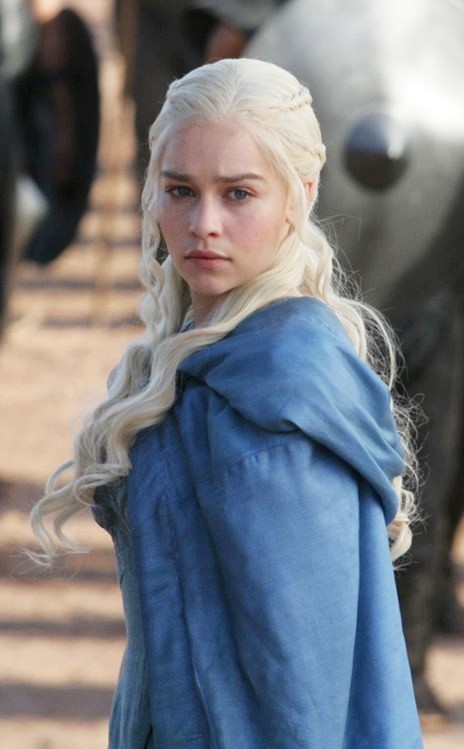
 Game of Thrones—the books and the HBO TV series—has been accused of exploitive use of women’s bodies, careless portrayals of sex, and needlessly cruel treatment of female characters. There aren’t many I know who would claim that the series is in fact feminist in its worldview—but in a long article for the New York Review of Books, Daniel Mendelsohn does just that. (Warning, the article contains spoilers galore for those not yet familiar with the series.)
Here’s Mendelsohn:
[Sansa and Arya Stark] represent two paths—one traditional, one revolutionary—that are available to Martin’s female characters, all of whom, at one point or another, are starkly confronted by proof of their inferior status in this culture… Those who complained about the TV series’ graphic and “exploitive” use of women’s bodies are missing the godswood for the weirwood trees: whatever the prurient thrills they provide the audience, these demeaning scenes, like their counterparts in the novels, also function as a constant reminder of what the main female characters are escaping from.
It’s an interesting argument, but I’m not sure if I buy it.
The world of Game of Thrones is a patriarchal one, to be sure, and neither the books nor the TV series flinch from the cruel realities of such a society—realities that many women in cultures across the world still live with today. Yet I can’t help but suspect that, in both iterations of the story, the imperative to show the results of societal misogyny in all its ugliness is actually a cover for an indulgence in degrading portrayals of women that seek to titillate far more than they enlighten.
I’d be interested to hear from Game of Thrones/Song of Ice and Fire fans on this. What do you think about Mendelsohn’s arguments, and about the portrayals of the women of Westeros in the books and TV show?


I’m an avid fan of both the show and the book series, and I think this is a pretty complicated topic that can be viewed from all sorts of angles.
In defense of George RR Martin, I’ll emphasize that an author’s creation of a sexist character doesn’t in turn make him or her sexist in anyway. George R.R. Martin is writing in a fantasy realm that mimics the Feudal Age of Europe. GIven that this was undeniably a patriarchal society, it’s logical that George R.R. Martin’s world of Westeros follow suit in this regard.
As far as the characters go, I think it’s obvious that there are some that embody feminist ideals. Characters like Daenerys Targaryen, Arya Stark, Cersei Lannister, and the Queen of Thornes all are undeniably strong, feminine leads; this point can’t be disputed. As one would expect to see in a feudal society, the men overtly hold domain through their lordships, but the truth is that the women are the primary catalysts for all the events that transpire in the series.
I’d actually raise a new point to Mendelsohn’s and say that these “degrading” sex scenes are only degrading when one fails to see the feminist ideals hiding behind them. If you closely examine a lot of these moments in the books, you’ll find that generally the woman is the one dominating the man with sexuality, rather than the other way around. Characters like Cersei, Daenerys, and Arianne all exert a higher level of control in their sexual encounters, and this is an important convention within the series. Sure, the show may have garnered more than a few followers solely because they enjoy seeing the scandalous sex scenes, but this is a vulgar mass and the simple truth is that sex is an extremely important part of life that dictates social interaction. So to those who think that the sex scenes are gratuitous, I’d ask that you consider these scenes again and seriously how these moments are shaping the overall story, because they undoubtedly are.
Good points here—though can we really place ALL the blame on the “vulgar mass”? Artistic intent is an important factor as well, and along those lines I think you may be giving the HBO showrunners, in particular, way more credit than they deserve.
Specifically, I simply don’t buy that they approach this material with high-minded ideals. On the contrary, they seem to revel in the more sensationalist sexual and violent content, creating scenes that are deliberately designed to titillate.
“But that’s the way it really was!” is a common defense of artists who like to indulge themselves and their audiences in this kind of material. It’s a common excuse for stories filled with rape, sadism, torture, and violence against women. These things DO happen, after all. But if the way artists portray these things in their books, TV shows, or movies indicates that they get a kick out of it and want their audiences to as well, forgive me for being a little dubious when they turn around and say “Don’t get mad at me, I’m a feminist!”